London Stone, 111 Cannon Street: what it is and how to see it free
London Stone is a block of limestone in a wall on Cannon Street, free to see. What we know, what's myth, and why it has moved so often.
9 slides. Swipe or scroll sideways. .
It looks like a lump of limestone in an office wall. It is also one of the City's oldest named landmarks, and nobody knows what it was for.
What we do know: ▪️ It is the remaining part of a once much larger stone, and it was already called London Stone by about 1100 ▪️ In 1450 the rebel Jack Cade struck it with his sword and claimed to be lord of the city ▪️ It stood in front of a big Roman building where Cannon Street station is now, and theories include a forecourt monument or part of its gateway ▪️ The Druid altar story, the "Stone of Brutus" saying (first printed in 1862) and the Lord Mayor as its guardian are all myths
You can see it from the pavement, opposite Cannon Street station, free. Sources: London Museum, Historic England, Wikipedia. We're independent and not connected with the City of London Corporation.
Save this for your next City walk, and send it to someone who works nearby.
Slide by slide.
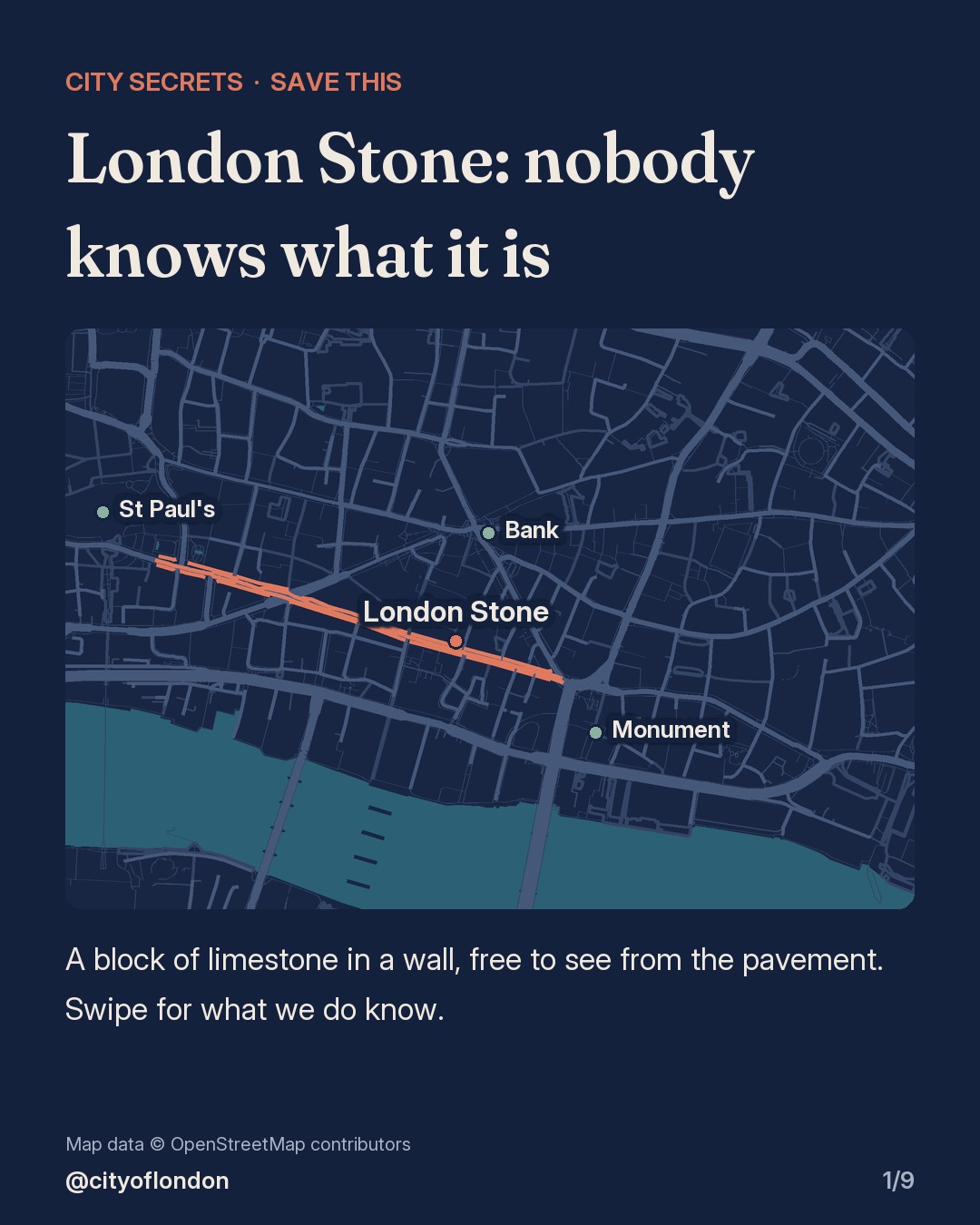
Map of the City of London with Cannon Street highlighted and London Stone marked, between St Paul's, Bank and the Monument.
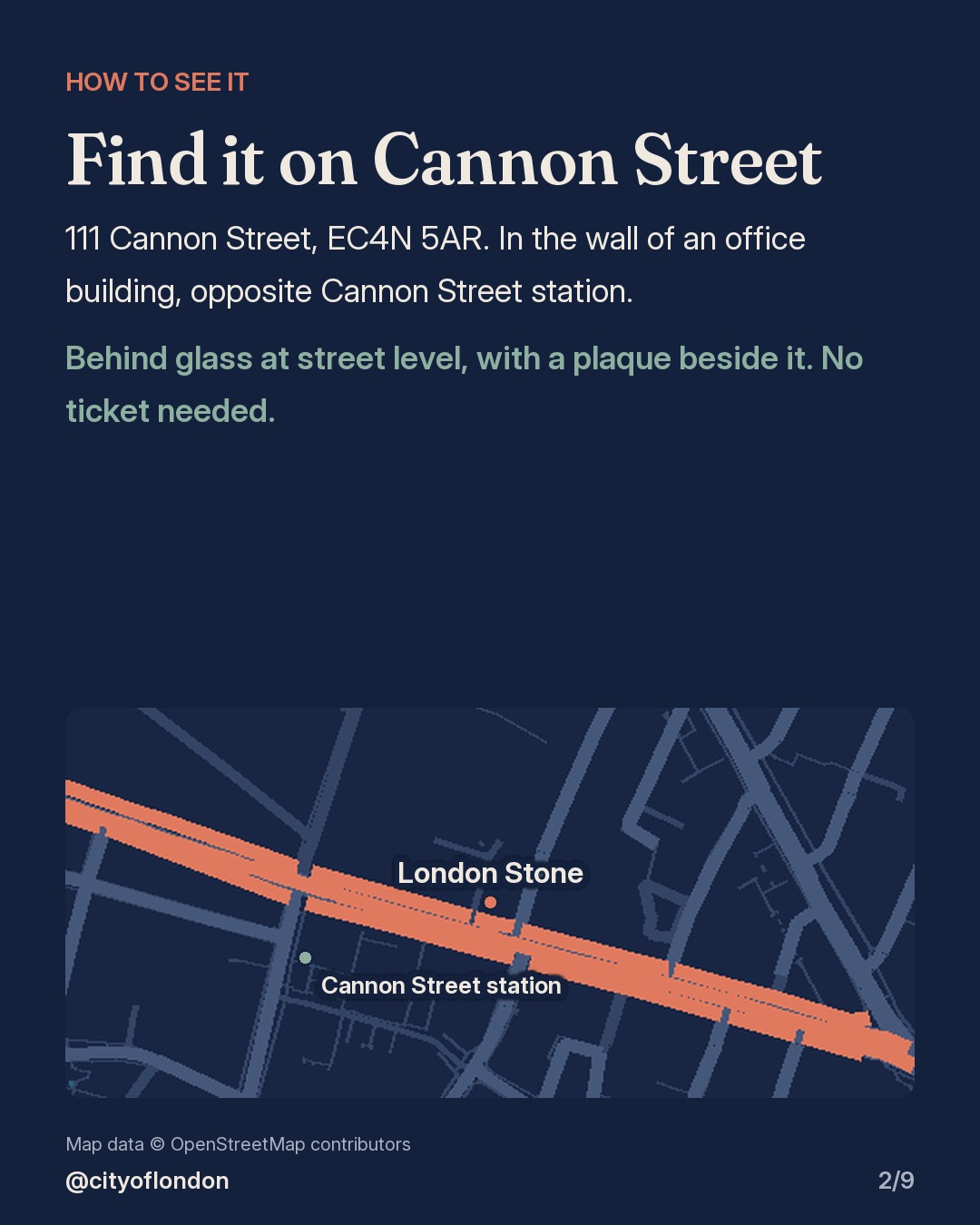
Close-up map of Cannon Street with London Stone marked opposite Cannon Street station. Text: 111 Cannon Street, EC4N 5AR, behind glass at street level, no ticket needed.
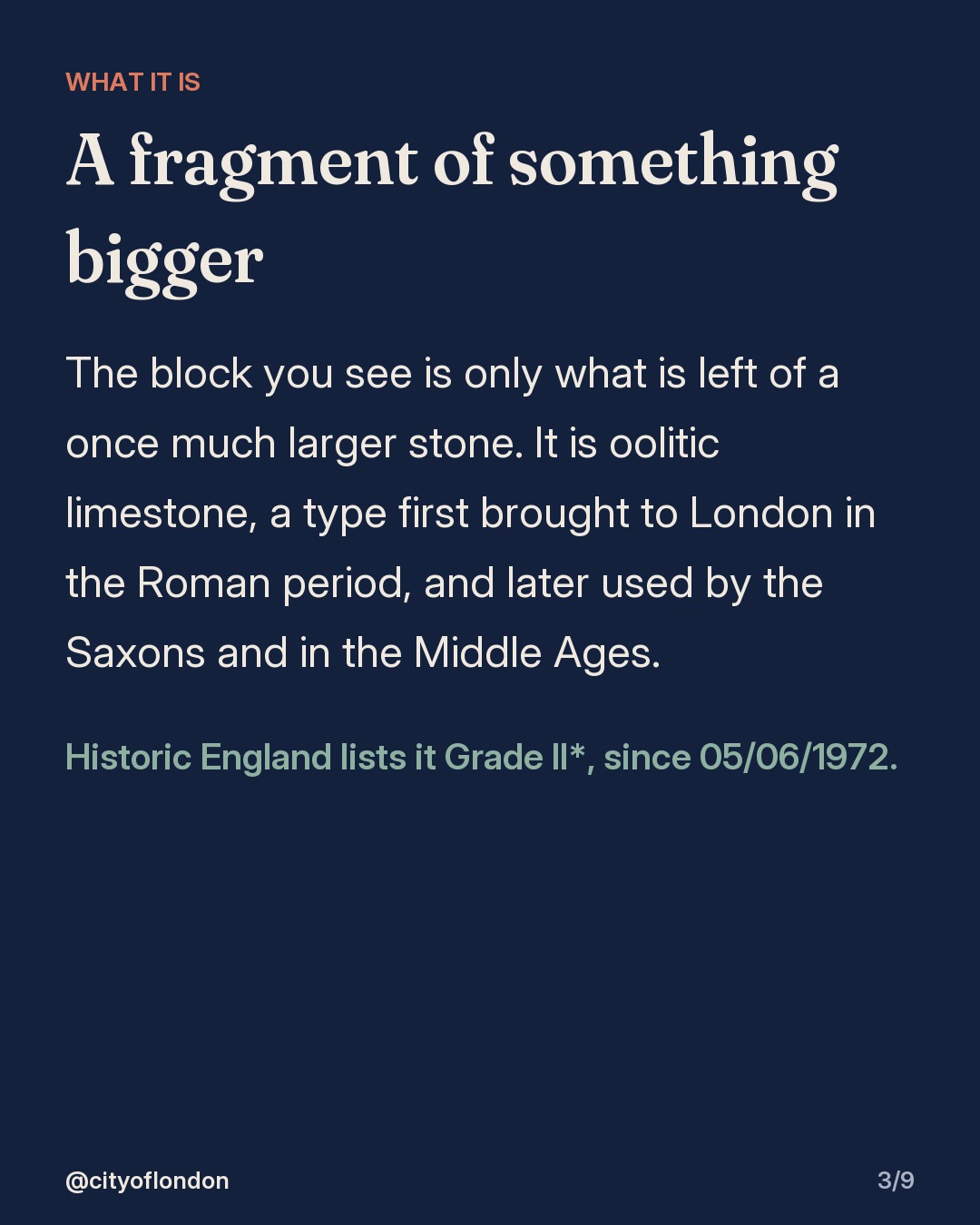
Text slide: London Stone is a fragment of a once much larger block of oolitic limestone, Grade II* listed by Historic England since 05/06/1972.
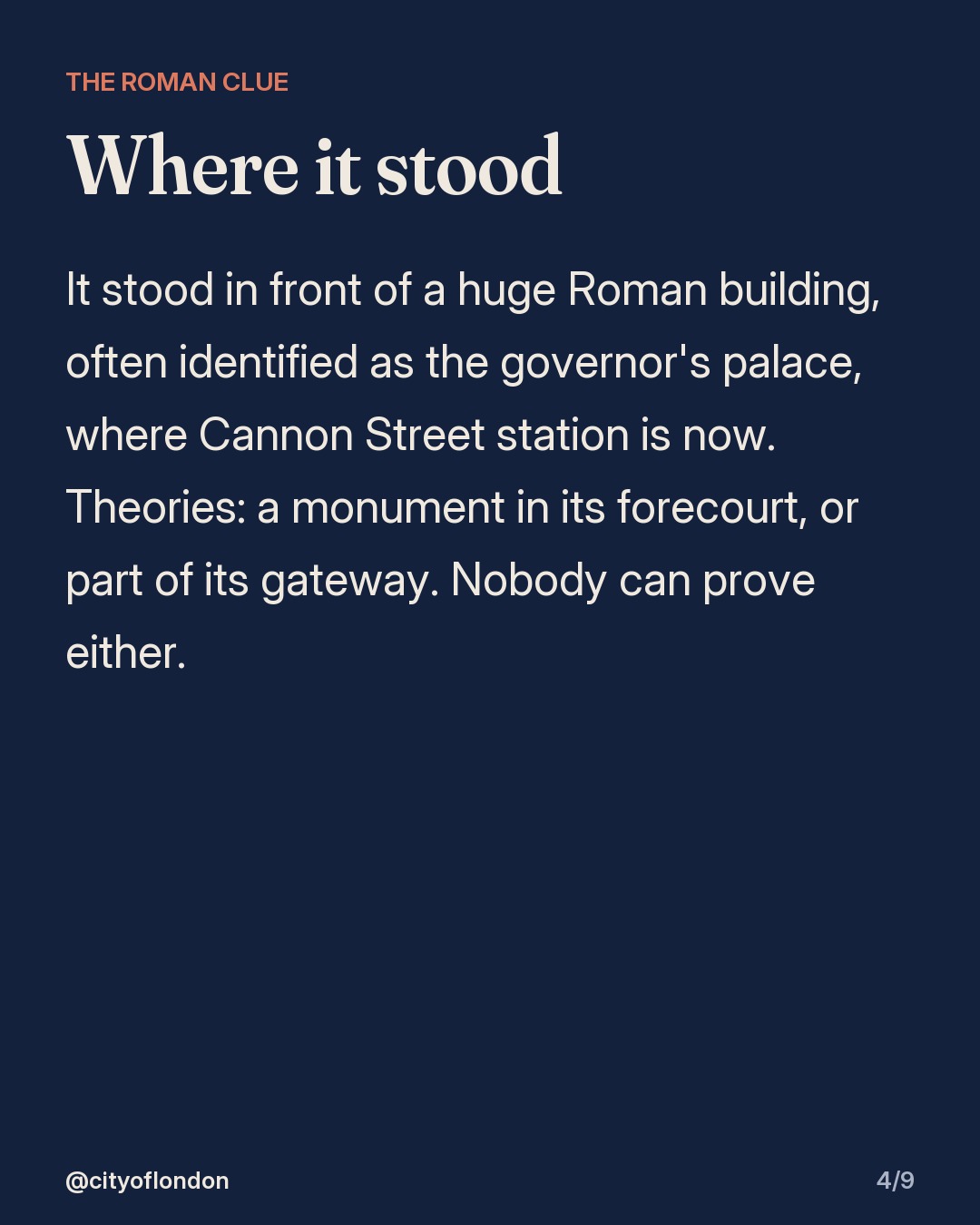
Text slide: it stood in front of a large Roman building, often identified as the governor's palace, where Cannon Street station is now; theories include a forecourt monument or part of its gateway, unproven.
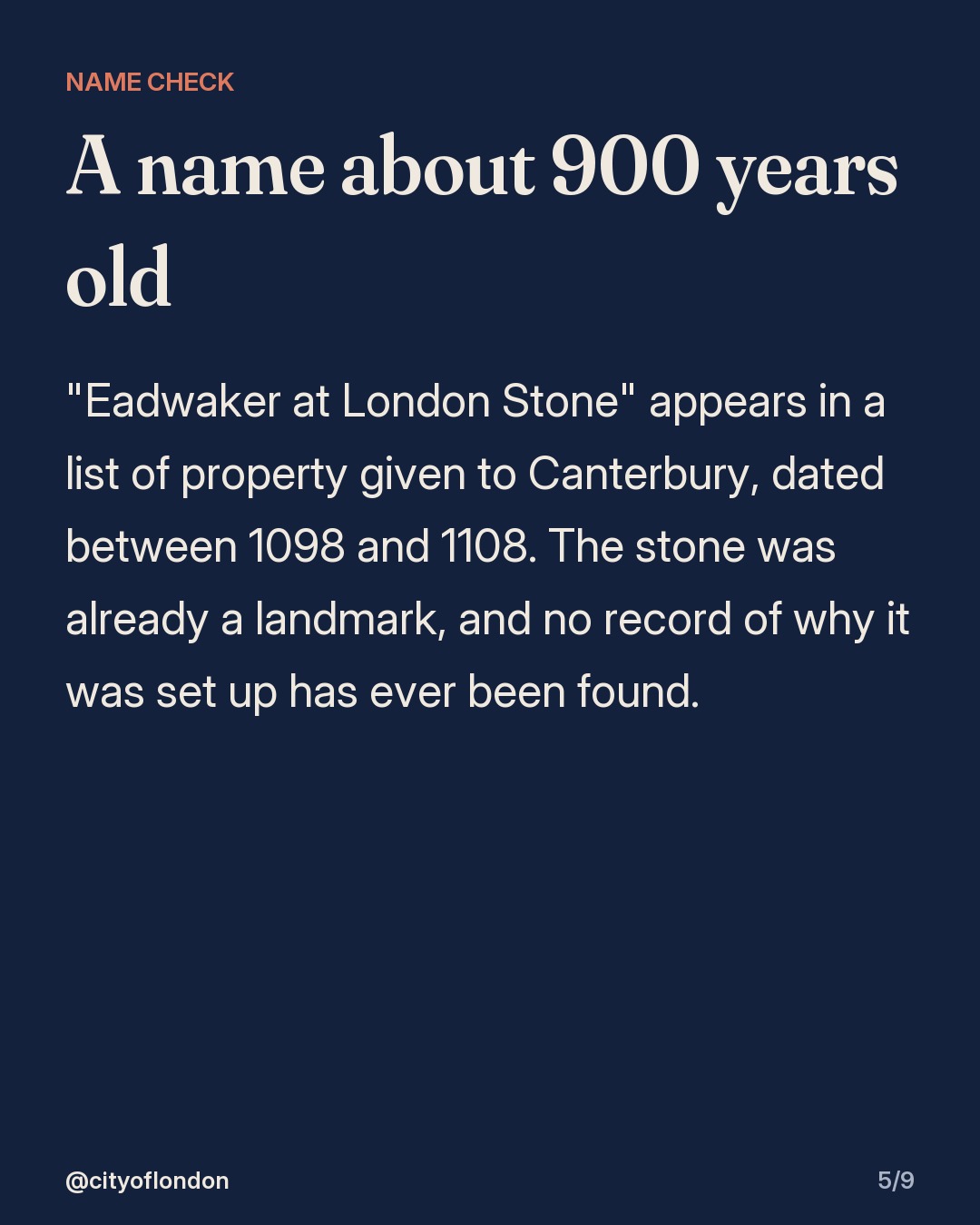
Text slide: "Eadwaker at London Stone" appears in a property list dated between 1098 and 1108, so the name is about 900 years old.
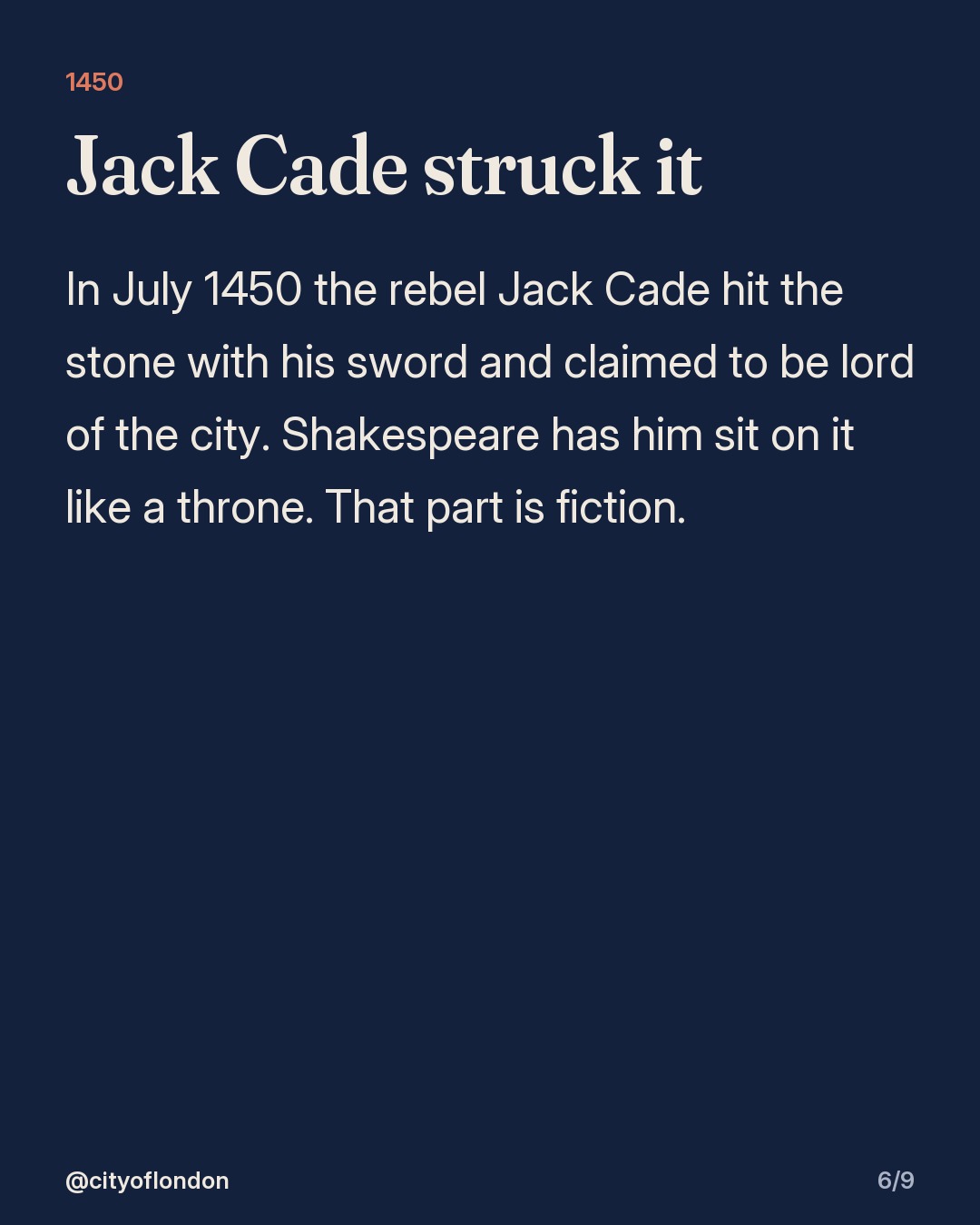
Text slide: in July 1450 Jack Cade struck the stone with his sword and claimed to be lord of the city; Shakespeare's version where he sits on it is fiction.
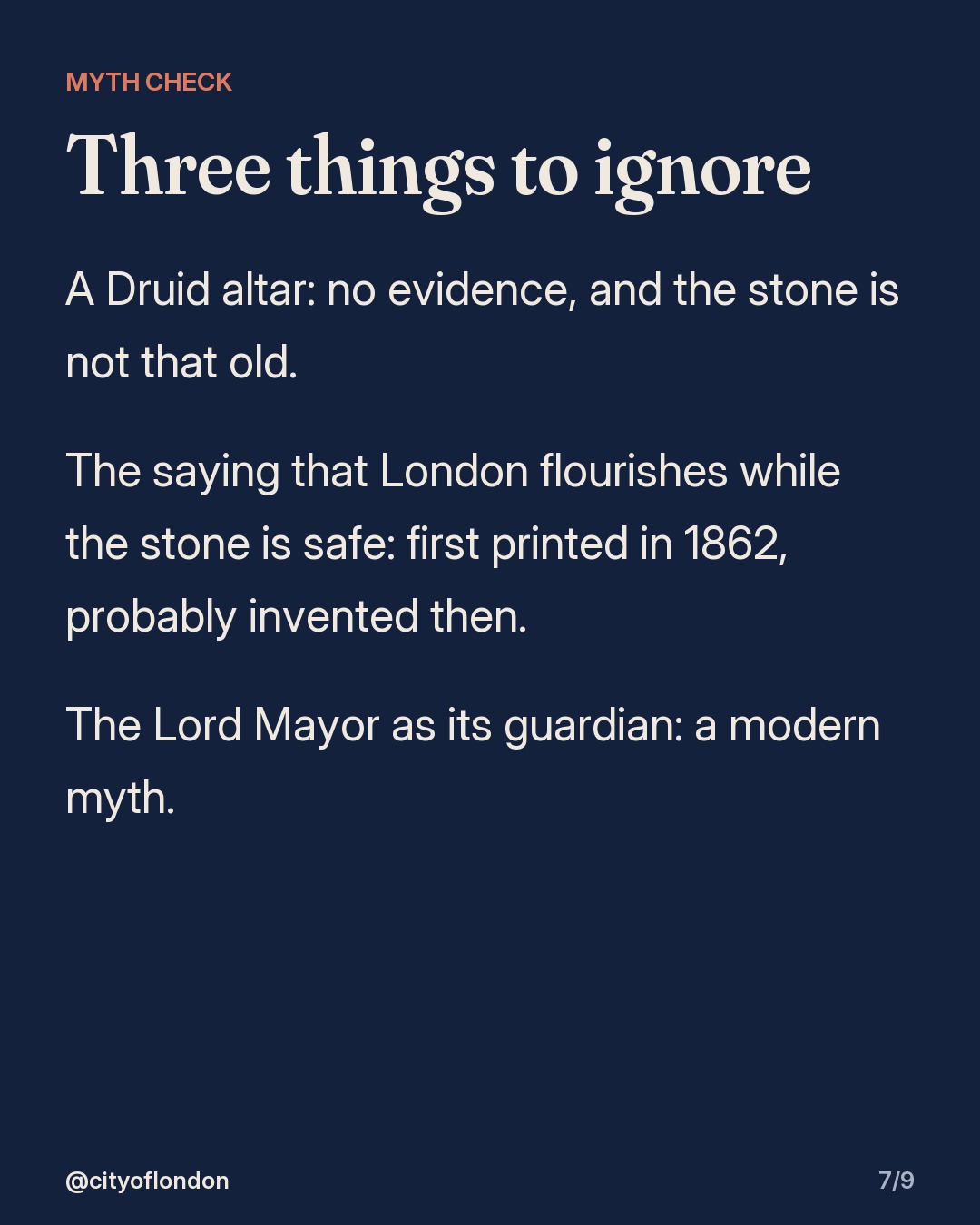
Text slide: three myths to ignore: a Druid altar, the "Stone of Brutus" saying (first printed 1862, probably invented then) and the Lord Mayor as guardian.
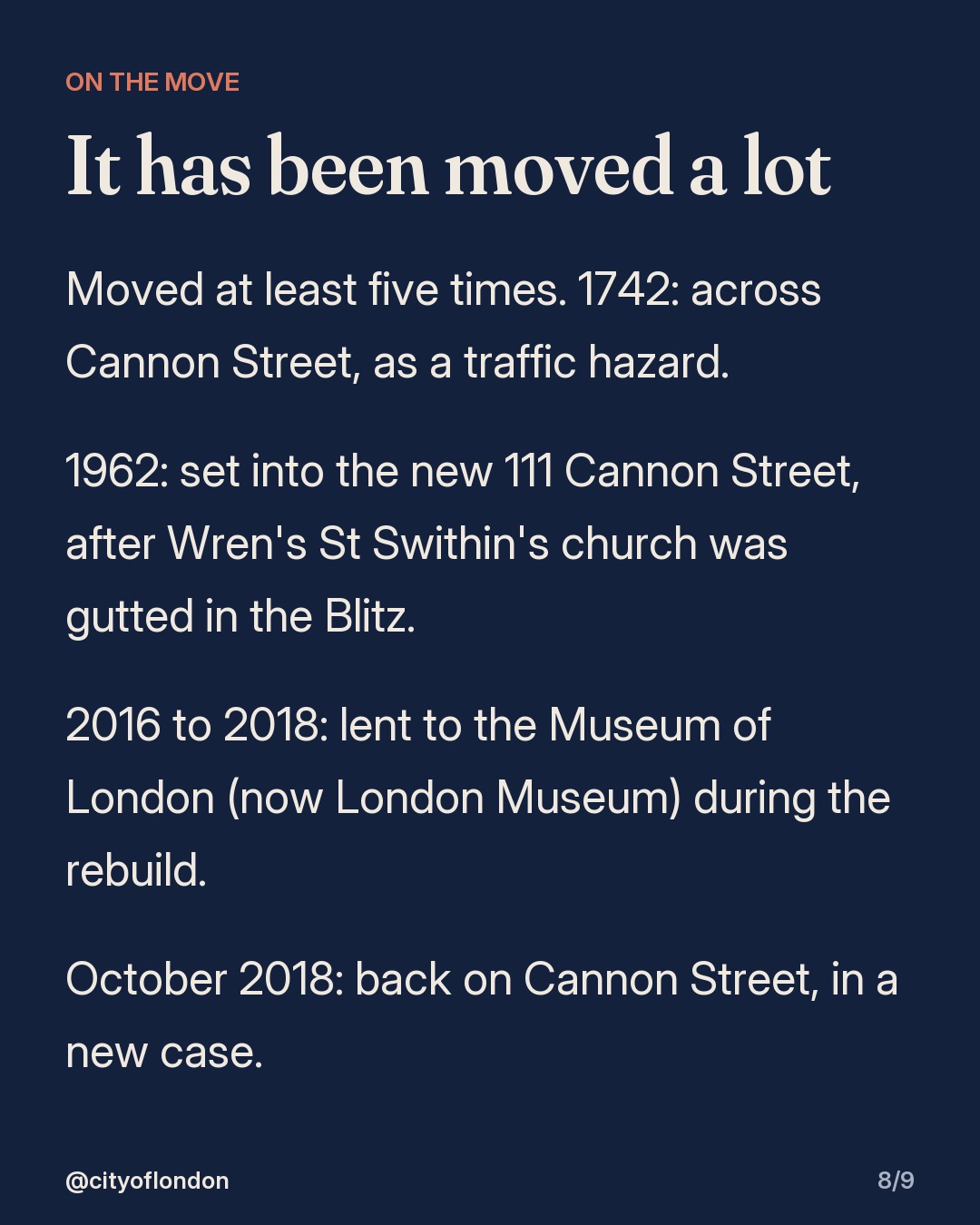
Text slide: the stone has been moved at least five times, including 1742 across Cannon Street, 1962 into 111 Cannon Street and 2016 to 2018 on loan to the Museum of London; it returned to Cannon Street in October 2018.
Closing card asking you to save and send the post, with sources and a note that the account is independent of the City of London Corporation.